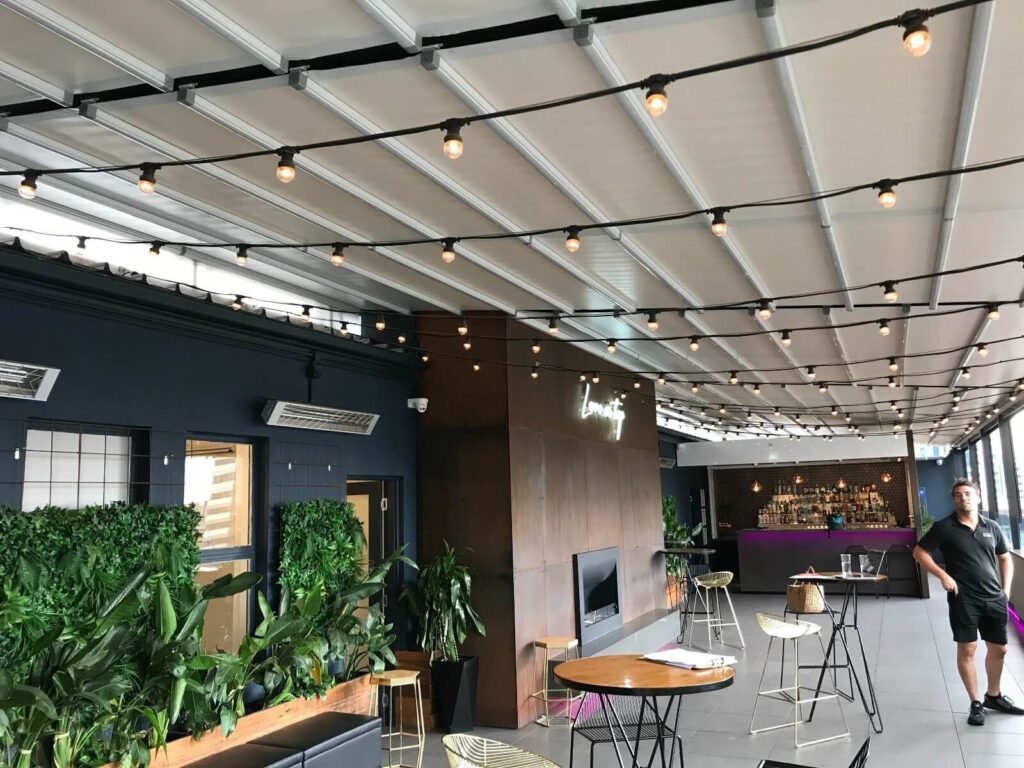
A Rising Flat retractable sun shade pergola — one of the systems available through Retractable Pergola Systems Victoria.
If you’re planning an outdoor entertaining area in Victoria and trying to figure out the best way to manage the sun, you’ve probably asked the same questions as thousands of other Melburnians: What’s the difference between a retractable awning and a full pergola shade system? Do I need a council permit? Will it cope with Melbourne’s notorious four-seasons-in-a-day weather? The good news is that a quality sun shade pergola solves all of those problems in one go — and in 2026, the technology and choice available to Victorian homeowners and businesses has never been better. Whether you’re after a sleek motorised retractable canopy for your alfresco, tough cafe blinds for a Melbourne restaurant, or a complete retractable roof and pergola system, this guide covers everything you need to know before making the investment.
What Exactly Is a Sun Shade Pergola — and How Is It Different to an Awning?
This is the number-one question Victorians ask, and it’s worth clearing up early. A traditional pergola is an open, freestanding or wall-attached structure with a latticed or open roof — beautiful for growing climbing plants, but not much use when the December sun is hammering down at 38°C. A sun shade pergola, by contrast, combines the structural elegance of a pergola frame with a retractable or fixed shade system over the top, giving you genuine protection from UV rays, heat and light rain.
An awning, on the other hand, is typically wall-mounted with no front posts. It extends a fabric canopy outward from the wall, retracting when not needed. Awnings are a brilliant — and often more cost-effective — solution for shading a single area like a window, door or narrow deck. The decision between a folding arm awning and a full retractable shade pergola really comes down to how much space you need to cover, how much you want it to function as an outdoor “room,” and your budget.
Quick rule of thumb: If you want shade for a deck up to around 4–5 metres wide with no front post obstruction, a folding arm awning is usually the right call. For larger areas, alfresco rooms that need to function in light rain, or spaces where you want a defined architectural feature, a retractable pergola system is worth the upgrade.
The Main Types of Sun Shade Pergola Systems Available in Victoria
The Australian market — and the Victorian market in particular — has been transformed by European engineering. Here’s a practical breakdown of the systems you’ll encounter:
| System Type | Best For | Rain Protection | Permit Usually Required? |
|---|---|---|---|
| Retractable Fabric Pergola (e.g. Oztech, Rising, Weinor) | Large alfresco areas, year-round outdoor rooms | Light–moderate rain when closed | Often yes (solid covering when extended) |
| Folding Arm Awning | Decks, patios, balconies up to ~7m wide | Sun + light drizzle with pitched installation | Usually exempt |
| Louvre / BioClimatic Pergola | Premium outdoor rooms, commercial hospitality | Full rain protection when blades closed | Yes |
| Conservatory / Pergola Shade Blinds | Existing pergola or conservatory roofs | Sun — some models offer rain protection | Typically exempt as an addition |
| Cafe Blinds / Clear PVC Blinds | Restaurants, cafes, covered entertaining areas | Excellent — encloses the space | Usually exempt |
Retractable Roof and Pergola Systems
These are the premium tier. Systems like the Oztech Muse, Tera and Aristo, as well as the Rising Flat and Weinor Pergotex II, are engineered in Europe and adapted for Australian conditions. The fabric roof runs in guide rails and motors open or closed at the touch of a button — or automatically, via integrated wind and sun sensors. When retracted, the fabric is completely protected in a cassette housing. These systems are ideal for anyone who wants an outdoor room that genuinely functions in Melbourne’s variable climate, not just on sunny days.
Explore the full range of retractable roof and pergola systems available through Retractable Pergola Systems Victoria.
Conservatory and Pergola Shade Blinds
If you’ve already got an existing pergola or conservatory structure and simply want to add shade functionality without a full structural upgrade, conservatory and pergola shade systems are a cost-effective solution. These sliding pergola shade systems sit on top of, or underneath, your existing pergola beams and pull across to provide full or partial coverage. Single and multiple roof blind configurations are available in sizes up to 22 metres wide.
Folding Arm and Pivot Arm Awnings
Victoria’s most popular shade product, folding arm awnings deliver wall-mounted shade with no front post obstruction — perfect for preserving garden views and keeping alfresco areas uncluttered. Premium European brands like Weinor, Harol and Aluxor are the gold standard, featuring marine-grade acrylic fabrics and powder-coated aluminium cassettes. Read more about pivot arm and folding arm awnings for Victorian homes.
Do I Need a Council Permit for a Sun Shade Pergola in Victoria?
This is the question that causes the most confusion — and rightly so, because the answer genuinely depends on what you’re installing. Here’s the plain-English version for Victoria:
- Open pergola with permeable/lattice covering: Generally permit-exempt under the Building Regulations 2018, provided it meets siting requirements and is under 20m².
- Retractable fabric pergola (e.g. Oztech, Rising Flat): Considered a “solid covering” when the canopy is extended — so it’s classified as a verandah under Victorian building law. A building permit is usually required.
- Folding arm awning: Typically permit-exempt as a wall-mounted shade structure, though you should always confirm with your local council.
- Louvre / BioClimatic pergola: Almost always requires a building permit due to its solid, adjustable roof.
- Cafe blinds and PVC outdoor blinds: Generally permit-exempt as an addition to an existing covered structure.
Important: The key distinction in Victorian law is open roof = pergola (may be exempt) versus solid or closable roof = verandah (building permit required). A reputable installer will manage permit documentation for you — always ask upfront whether permits are included in your quote.
Retractable Pergola Awning vs. Fixed Structure: Which Is Right for Melbourne’s Climate?
Melbourne’s weather — four seasons in one day, intensifying summer heat events, and gusty southerly changes — makes this question genuinely important. A retractable system wins on flexibility, but a fixed louvre pergola wins on durability and full weather protection. Here’s how to think through it:
Choose a retractable pergola awning if: you want the best of both worlds — full shade on demand, open sky for winter sun and cool evenings. Modern systems include automatic wind and sun sensors that retract the fabric before a gust causes damage, so you’re not babysitting the weather. The fabric cassette fully protects the material when retracted, extending fabric life significantly.
Choose a fixed louvre or BioClimatic pergola if: you want a premium, architectural outdoor room that functions in all weather — including heavy rain — and you’re comfortable with a building permit. The Rising BioClimatic Louvre Pergola and the B Cube Classic range, available through Retractable Pergola Systems Victoria, represent the top end of this category.
The majority of Victorian homeowners land on a retractable shade pergola combined with outdoor blinds and awnings on the sides — this creates a functional, protected outdoor room that opens up completely on fine days without a full permit headache.
The Role of Cafe Blinds and Outdoor PVC Blinds in a Complete Shade System
A sun shade pergola handles the overhead — but what about the sides? This is where cafe blinds (also called bistro blinds or clear PVC outdoor blinds) come into their own. If you run a café, restaurant or bar in Victoria, outdoor seating is revenue that disappears the moment it rains or the wind picks up. Clear PVC cafe blinds allow you to fully enclose your outdoor dining area when the weather turns, keeping patrons comfortable without sacrificing that sense of being outdoors.
For residential use, the same logic applies: pair your retractable pergola roof with drop-down PVC or mesh outdoor blinds on the perimeter and you’ve effectively created a year-round outdoor room at a fraction of the cost of an enclosed extension. Options include:
- ZipTrak blinds: No zips, ropes or straps — a single smooth pull-down action. Popular for alfresco areas and café perimeters.
- eZip Clear PVC Blinds: Track-guided, zipped on the sides for a more weather-sealed result. Ideal for windy coastal or suburban sites.
- Geared Roller Clear PVC Blinds: Custom made, available in winder or motorised operation. Suitable for very wide spans.
- Mesh fabric outdoor blinds: Great for privacy and sun filtering while preserving airflow and views.
Many Victorian café and restaurant operators are now pairing retractable pergola awnings overhead with a full perimeter of clear PVC blinds, effectively doubling their usable seating capacity year-round. It’s one of the smartest commercial investments available in the current hospitality environment.
Motorisation, Automation and Smart Integration: What’s Available in 2026?
Manual awnings and pergola shade systems are still popular — they’re cost-effective and reliable — but motorised systems are now the norm for any installation of meaningful size. Here’s what the technology landscape looks like in 2026:
- Basic motorisation: Wall-mounted switch or hardwired remote. Standard on most premium systems.
- Wind sensors: Automatically retract the system when wind speed exceeds a safe threshold — critical in Melbourne’s gusty conditions. Standard or optional depending on the product.
- Sun and wind sensor combos with timers: Extend the shade at a preset time when the sun hits a certain intensity, retract before sunset or in response to wind. Ideal for homeowners who travel or work long hours.
- C-Bus home automation integration: Retractable Pergola Systems Victoria supplies systems that connect to C-Bus home automation, enabling your shade system to be part of a whole-home smart control setup.
- Solar-powered motor options: Some Weinor pergola models feature an integrated solar module driving the motor — no external wiring required, truly wireless operation.
If you want the full motorisation story for your project, the team at retractable awning motorisation specialists can match you to the right controller and sensor package for your situation.
How to Choose the Right Fabric for Your Retractable Shade Pergola
Fabric choice is more than an aesthetic decision — it directly affects durability, sun protection performance, heat reduction, and how the system behaves in rain. The main categories to understand:
- Marine-grade acrylic (e.g. Sunbrella, HVG Sattler): The premium choice for awning fabrics. Solution-dyed for colour stability, mould and UV resistant, breathable. Lasts 10–15+ years with basic care. Available in a wide range of solid and striped colourways.
- Woven polyester with PVC coating: More waterproof than acrylic, excellent for pergola roofs where rain protection is needed. Slightly less breathable, but superb for outdoor dining areas where dryness matters more than airflow.
- Open-weave mesh: 5–10% openness fabrics (like Visiontex) cut glare and UV while preserving views and airflow. Ideal for perimeter side screens and drop arm awnings.
Lighter fabric colours reflect more solar radiation and keep the space beneath cooler. Darker colours absorb heat — which sounds counterproductive, but can be desirable in winter. The team at Retractable Pergola Systems Victoria will help you select the right colour and openness factor for your specific orientation and use case during your free measure and quote.
Awnings Victoria: What Melbourne Homeowners and Businesses Need to Know
Victoria’s built environment — a mix of period homes in Melbourne’s inner suburbs, contemporary knockdown-rebuilds in the outer growth corridors, and commercial hospitality strips from Fitzroy to Werribee — means there’s no one-size-fits-all shade solution. The right product depends on:
- Orientation: North and west-facing outdoor areas receive the most intense afternoon sun in summer. East-facing areas need morning shade. Knowing your orientation is step one in any shade design conversation.
- Wind exposure: Bayside and coastal properties face stronger and more frequent gusts. Systems with certified wind ratings and automatic retraction sensors are strongly recommended.
- Heritage overlays and HOA rules: Some Melbourne councils have heritage overlay zones with restrictions on visible external structures. A reputable installer will be across these requirements and can help with compliance documentation.
- Commercial vs. residential loading: Commercial-grade systems are engineered to handle the constant operation cycles of a busy hospitality venue. Don’t spec a residential product for a commercial application.
Retractable Pergola Systems Victoria covers the full Melbourne metropolitan area, as well as regional Victoria including Geelong, the Mornington Peninsula, and the Surf Coast. Whether you’re in Port Melbourne, Keilor, Werribee or further afield, free on-site measure and quote appointments are available.
Don’t Overlook Drop Arm Awnings for Windows and Upper Floors
Not every shade challenge involves a large alfresco area. Upstairs windows, exposed west-facing facades, and balcony doors are often the primary cause of overheating in Melbourne homes. Drop arm window awnings are a brilliantly effective solution — they fix to the exterior around the window or door frame, using a mesh or canvas blind on pivoting metal arms to block direct sun without cutting off ventilation. External blinds of this type can reduce heat transfer through glazing by up to 75%, delivering real energy savings over a Victorian summer.
Frequently Asked Questions: Sun Shade Pergola Systems in Victoria
How much does a sun shade pergola cost in Melbourne?
Pricing varies significantly by system type, size and motorisation. A quality folding arm awning typically starts from around $2,000–$4,000 installed. A mid-range retractable pergola system for a standard alfresco can range from $5,000 to $15,000+. Premium louvre pergolas and large retractable systems for commercial applications can exceed $30,000. The best approach is to request a free measure and quote — prices have shifted with material and currency changes, and a site-specific assessment gives you an accurate figure without guesswork.
Can I add a retractable shade system to my existing pergola?
Yes, in most cases. Conservatory and pergola shade systems are specifically designed to integrate with existing pergola structures. The installation team will assess the condition and dimensions of your existing structure during the measure and quote visit.
Will a motorised retractable awning cope with Melbourne’s strong winds?
Premium European-engineered systems are designed with wind resistance classes in mind. Wind sensors are available for most motorised systems and will automatically retract the fabric before it is exposed to damaging wind speeds. If your property is in an exposed coastal or suburban position with regular afternoon westerlies, sensor automation is strongly recommended over manual-only operation.
What is the difference between a sliding pergola shade and a folding arm awning?
A sliding pergola shade (also called a retractable pergola roof or sunroof system) moves horizontally across a fixed structural frame, opening and closing the roof plane. A folding arm awning is wall-mounted and uses articulated arms to extend a canopy outward from the wall, with no supporting front posts. The pergola shade provides overhead coverage only; the folding arm awning extends coverage beyond the building line and is better suited for shade where no existing overhead structure exists.
Are cafe blinds suitable for home use, or just commercial venues?
Absolutely suitable for home use. Cafe blinds (clear PVC or mesh outdoor blinds) are increasingly popular on residential alfresco areas, particularly in Victoria where enclosing the space means using it more months of the year. They’re often installed as a perimeter complement to a retractable overhead shade system, turning an open alfresco into a fully functional outdoor room in under a minute.
How do I maintain a retractable pergola shade system?
General maintenance is straightforward. Wipe down fabric with a mild detergent and rinse thoroughly — never dry clean or machine wash. Clean the aluminium cassette and guide rails seasonally. Keep moving parts lightly lubricated. Don’t retract the fabric when wet if you can avoid it — allow it to dry in the open position first. Most European-manufactured systems available in Australia come with a minimum 2-year warranty; premium brands often provide 5+ years on mechanical components.
Ready to Transform Your Outdoor Space?
Retractable Pergola Systems Victoria has been supplying and installing premium sun shade pergola systems, retractable awnings, cafe blinds and outdoor blinds across Melbourne and Victoria for years. All systems are European designed, professionally installed, and backed by expert after-sales support.
Get a free, no-obligation measure and quote at your home or business. Our team will assess your space, orientation, council requirements and budget — then recommend the system that actually suits your situation, not just the most expensive one on the shelf.
Book Your Free Measure & Quote →Call us on (03) 9595 9055 | Warehouse: 40/23–25 Bunney Rd, Oakleigh South VIC 3167