In most cases in Victoria, yes — you do need a building permit for a pergola or outdoor structure with a solid roof. A basic open-frame pergola under 20m² with a permeable covering may be exempt. But the moment you add any waterproof material — polycarbonate sheeting, Colorbond, retractable fabric canopy, or motorised louvre blades — your structure is legally classified as a verandah and a building permit is required, regardless of size.
One of the most common questions we hear from Melbourne homeowners planning their outdoor living space is: “Do I actually need a building permit for my pergola or awning?” The honest answer is that it depends on your structure’s size, roof type, location on your property, and your specific council area. Getting it wrong can result in costly rectification work, fines, and real headaches when you come to sell your home. This guide — updated to reflect Victoria’s building regulations as they stand in 2026 — gives you everything you need to navigate the process with confidence, from the specific exemption criteria under the Victorian Building Authority (VBA) to what happens when you need a permit and how to get one.
Whether you’re planning a simple shade sail in Brighton, a retractable pergola system in Bayside, or a fully covered entertaining zone in Frankston, the regulatory landscape is the same across Victoria — though council planning overlays can add a layer of complexity we’ll walk you through below.
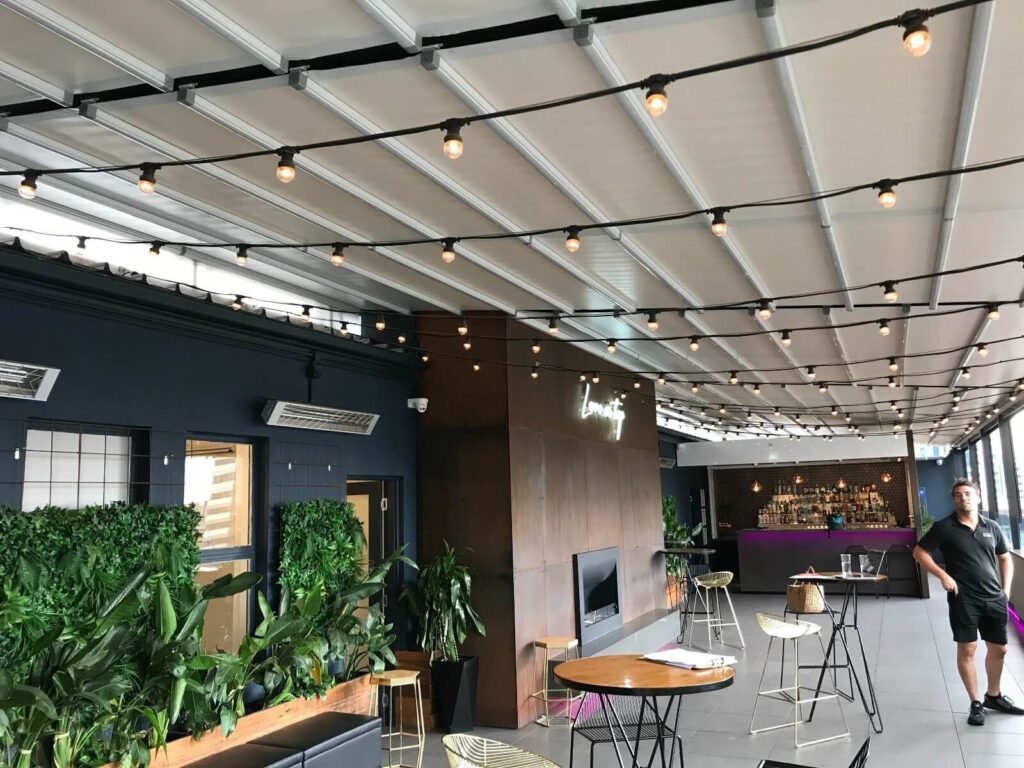
Do You Need a Building Permit for a Pergola in Victoria?
Victoria’s building permit system is governed by the Building Act 1993 and the Building Regulations 2018. Under these regulations, whether your structure needs a permit turns on a single critical distinction: is it a pergola or a verandah? It sounds like semantics, but it’s the dividing line that determines your compliance obligations.
Under the Building Regulations 2018, a pergola is defined as an open structure that is unroofed but may have a covering of open-weave, permeable material. A verandah is a roofed structure — typically attached to a dwelling — with one or more open sides. And here’s the critical point: verandahs always require a building permit.
| Structure Type | Roof Type | Legal Classification | Permit Required? |
|---|---|---|---|
| Open-frame pergola | No roof / shade cloth / open-weave lattice | Pergola | Subject to size |
| Pergola under 20m², under 3.6m height | Permeable / shade cloth only | Pergola (exempt category) | Likely Exempt |
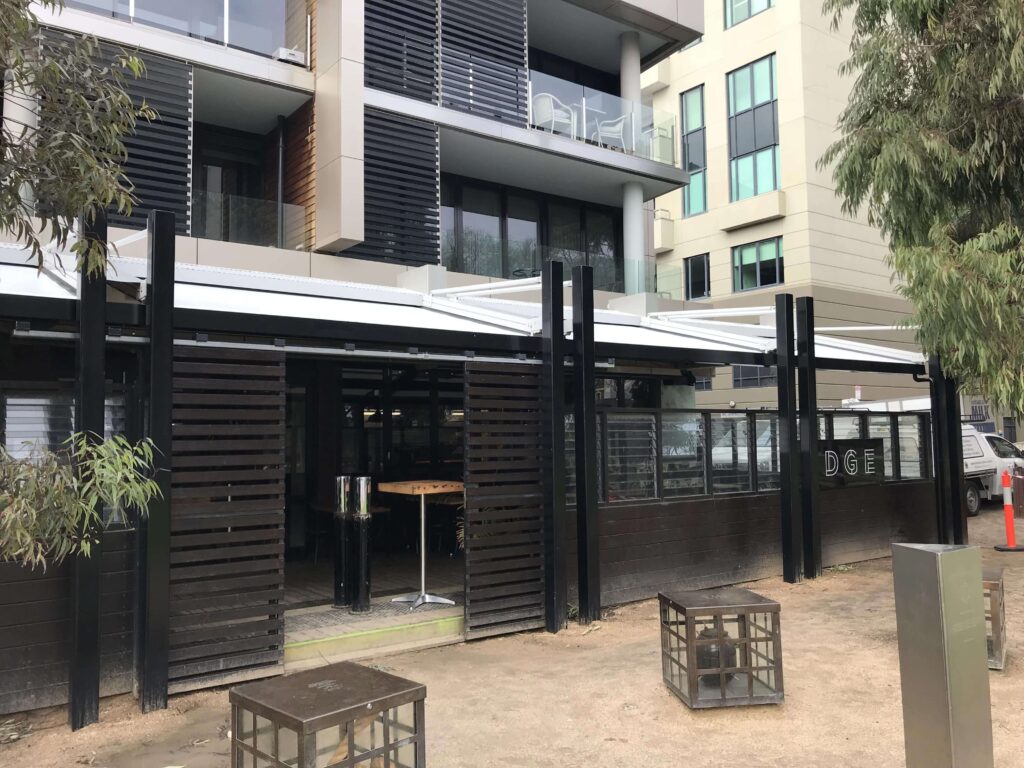
| Retractable pergola (fabric/PVC canopy) | Retractable waterproof canopy | Verandah | Permit Required |
| Motorised louvre pergola | Adjustable aluminium louvres (waterproof) | Verandah | Permit Required |
| Polycarbonate/Colorbond roof structure | Solid / semi-solid roofing | Verandah | Permit Required |
| Fabric awning (attached to house) | Retractable fabric | Awning | Usually exempt |
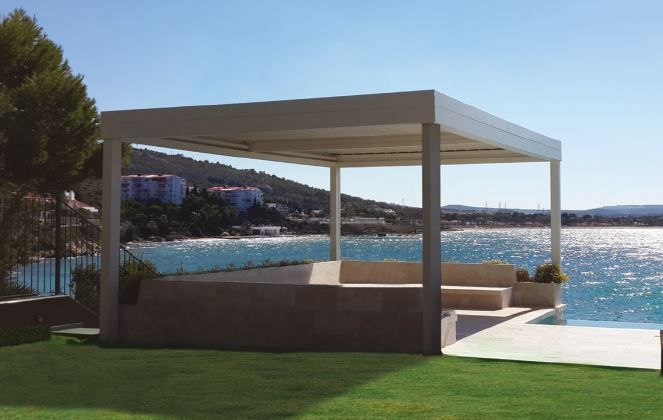
| Freestanding gazebo | Solid roof, freestanding | Class 10a building | Exempt if under 10m² |
The key takeaway for most Melbourne homeowners is this: if you want a genuinely weatherproof outdoor space — which is precisely what most people planning a retractable roof system or pergola shade system are after — you will need to obtain a building permit.
Exempt Structures vs. Structures That Require Permits: The 2026 Rules
Under Schedule 3 (Item 16) of the Building Regulations 2018, a pergola is exempt from requiring a building permit only when all of the following conditions are satisfied simultaneously:
- Floor area does not exceed 20 square metres — roughly a 5m × 4m footprint. This is the total covered area of the structure.
- Height does not exceed 3.6 metres — measured from ground level to the highest point of the structure.
- Roofing material is open-weave and permeable only — shade cloth, open-weave lattice, wires for climbing plants, or timber slats with gaps. No waterproof, solid, or semi-solid covering.
- Location is no further than 2.5 metres forward of the front wall of the dwelling — structures positioned closer to the street than this trigger a permit requirement.
- Not positioned over an easement — council, stormwater, and sewer easements require written consent before any structure can be built over them, even if exempt from a building permit.
- Structure does not adversely affect any building to which it is attached — even exempt pergolas must be designed to resist wind and structural loads safely.
Every single exemption criterion must be met for your pergola to qualify. If your structure is 21m² instead of 19m², or sits 2.6 metres from the front wall instead of 2.5m, the exemption does not apply and a building permit is required. Many Melbourne homeowners discover this only after construction — and then face building notices and rectification costs.
What About Awnings?
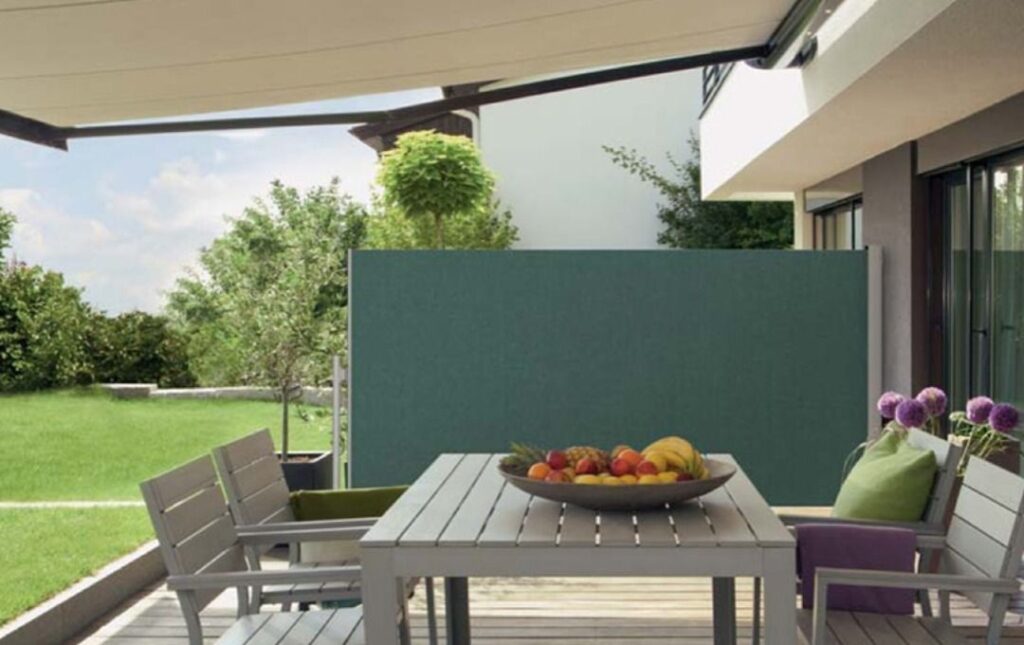
Fabric awnings — including folding arm awnings, drop arm awnings, and standard canopy awnings attached to a dwelling — typically do not require a building permit in Victoria when they are retractable, fabric-based, and not structurally complex. The key is that they do not add to the floor area or alter the structural integrity of the home. However, if your awning involves bolting into a structural element, is particularly large, or is associated with broader domestic building works valued over $10,000, professional installation by a registered building practitioner is required.
Victoria Pergola Permit Checker
Answer 6 quick questions to find out if your structure likely needs a building permit — and what to do next.
What type of outdoor structure are you planning?
What is the approximate floor area (footprint) of your planned structure?
Where on your property will the structure be located?
Which Melbourne council area is your property in?
Is your property subject to any of the following?
How are you planning to have the structure installed?
How Your Council Area Affects Permit Requirements in Melbourne
Victoria’s Building Regulations 2018 apply uniformly across every Melbourne metropolitan council — the exemption thresholds (20m², 3.6m height) are state-wide rules. However, your local council’s planning scheme adds a separate layer of requirements that can mean you need a planning permit even if no building permit is technically required, or vice versa.
Planning permits are issued by your local council and are separate from building permits issued by a building surveyor. In some Melbourne suburbs — particularly those with Heritage Overlays, Vegetation Protection Overlays, or Design and Development Overlays — a planning permit for your pergola or outdoor structure must be obtained before a building permit can be issued.
Bayside, Brighton & Sandringham
Heritage overlays apply across many streets. Pergolas visible from the street often require planning permits. Check with Bayside City Council.
Stonnington, Malvern & Prahran
Significant heritage and character overlays. Even small outdoor structures may require planning review. Contact Stonnington Council.
Wyndham & Melton
Growth corridor councils — generally fewer overlays in newer estates. Building permit requirements follow standard VBA rules. Check Wyndham City.
Maroondah & Knox
Vegetation Protection Overlays may affect structures near established trees. Check with Maroondah City Council.
Mornington Peninsula
Specific setback requirements apply near coastal zones and in green wedge areas. Mornington Peninsula Shire planning department is your first call.
Hume & Whittlesea
Bushfire Management Overlays apply in parts of these councils — material specifications and setbacks may vary. Hume City Council building services can advise.
The key practical takeaway: always check your property’s planning overlays on VicPlan before planning your outdoor structure. This free tool shows all overlays affecting your land. If you see any overlay listed, contact your council’s planning department before engaging an installer.
Setbacks, Boundaries, and Strata Restrictions
Boundary Setback Rules in Victoria
Even when a structure qualifies for a building permit exemption, it must still comply with the siting provisions of the Building Regulations 2018 (Residential Code). For side and rear boundaries, the relevant setback requirements depend on the height of the structure and your lot’s zoning. As a general guide for Melbourne residential zones:
Side & Rear Setbacks
Structures under 3.6m height must generally be set back at least 1 metre from side and rear boundaries. Structures that touch or exceed the boundary line require engineering assessment and may need neighbour consent.
Front Setbacks
No part of an exempt pergola may project more than 2.5 metres forward of the front wall of your home. Structures placed closer to the street than this require a building permit regardless of size.
Easements
No structure may be built over a council, stormwater, or sewer easement without the written consent of the relevant authority. This requirement applies even to exempt structures.
Corner Blocks
If your property is on a corner, the intersection of two street alignments creates a visibility splay zone. Structures within 9 metres of this intersection point may face additional height restrictions.
Strata and Owners Corporation Restrictions
If your property is part of a strata scheme or has an owners corporation — including apartments, townhouses, villa units, and some semi-detached homes — you face an additional layer of approval before any outdoor structure can be installed. Owners corporations (formerly bodies corporate) in Victoria are governed by the Owners Corporations Act 2006 and typically require written approval from the committee or a general meeting before any external structure, fitting, or alteration can be made to common property or even to your own lot’s exterior.
This applies even to seemingly minor additions like folding arm awnings or small shade sails on a balcony. Failure to obtain owners corporation approval can result in orders to remove the structure at your expense. Check your outdoor blinds and awnings options that may comply with strata scheme requirements, and always obtain written approval from your owners corporation before proceeding.
Wind Load and Structural Compliance in Victoria
Even for structures that are exempt from requiring a building permit, Victoria’s regulations are clear: the structure must still be designed and constructed to safely resist applied loads. Under the National Construction Code (NCC) and Australian Standards, outdoor structures in Victoria must comply with:
- AS/NZS 1170 — Structural Design Actions (Wind): determines wind speed and wind pressure requirements based on your location and exposure category. Melbourne is classified in Wind Region A, with specific local requirements.
- AS/NZS 1664 — Aluminium Structures: applies to aluminium-framed pergola and awning systems and specifies structural requirements for aluminium members.
- NCC Housing Provisions Standard 2022: governs the structural design of residential building work in Victoria, including the attachment methods for structures fixed to dwellings.
- AS 4055 — Wind Loads for Housing: simplified wind load standard applicable to Class 1 residential structures, commonly used for permit assessments.
When a building permit is required, you will need to provide engineering documentation demonstrating your structure’s compliance with these standards. Professional suppliers of retractable roof and pergola systems in Melbourne — including our Weinor and Rising systems — provide certified engineering documentation as part of the installation package, significantly streamlining the permit process.
The Building Permit Application Process: Step by Step
If your pergola or outdoor structure requires a building permit, here is the practical process you’ll follow in Victoria. Under the Building Act 1993, building surveyors must process permit applications within 10 business days of receiving a complete application — but the preparation phase can take several weeks depending on your documentation needs.
- Check VicPlan for your property overlays Visit mapshare.vic.gov.au/vicplan and search your property address. Review all planning overlays. If any apply, contact your council’s planning department before proceeding.
- Determine if a planning permit is also required Contact your local council’s planning department. If a planning permit is required, it must be issued before you apply for a building permit. This step can add 6–12 weeks to your timeline.
- Engage a registered building surveyor You can use either a council-appointed building surveyor or a private building surveyor. Private surveyors often offer faster turnaround. The VBA’s Find a Practitioner tool helps locate registered surveyors.
- Prepare your documentation You’ll need site plans (showing structure location, dimensions, and boundary setbacks), elevation drawings, and for most covered structures, engineering certification to AS/NZS 1170 and the NCC. Your installer or supplier should assist with this documentation.
- Lodge your building permit application Submit your complete application and documents to your building surveyor. Once the application is complete, the surveyor has 10 business days to issue a decision. Pay the required permit fee at this stage.
- Receive permit and commence installation Work cannot begin until the permit is in force. Your permit will specify mandatory inspection stages — typically a footing inspection (if applicable) and a final inspection. Never skip these — they confirm the structure is built to permit.
- Final inspection and occupancy After work is complete, your building surveyor conducts a final inspection. Once satisfied, a Certificate of Final Inspection is issued. Keep this document safely — you’ll need it if you ever sell the property.
Common Reasons Permit Applications Are Rejected in Victoria
Understanding why applications fail is one of the most practical things we can tell you, because most rejections are entirely avoidable with proper preparation. Common reasons include:
Incomplete Documentation
Missing site plans, absent engineering certification, or unsigned declaration forms. Building surveyors cannot process incomplete applications — the 10-day clock doesn’t start until documentation is complete.
Setback Non-Compliance
Structure positioned too close to a boundary or too far forward of the dwelling’s front wall. Always have a surveyor confirm exact boundary positions before finalising your design.
Heritage or Planning Permit Not Obtained
Applying for a building permit before obtaining a required planning permit. The order of approvals matters — planning always precedes building.
Inadequate Structural Engineering
Engineering documentation that doesn’t address the correct wind region, exposure category, or NCC requirements for your specific site.
DIY Installation vs. Professional Installation: What the Regulations Actually Say
Victoria’s Domestic Building Contracts Act 1995 and the Building Act 1993 are specific about when you can self-install and when you must use a registered professional. The key threshold in Victoria is $10,000:
The $10,000 Rule
If the total value of your domestic building work — including materials, labour, and the product cost — exceeds $10,000, you are required to use a registered building practitioner under Victorian law. This applies whether or not a building permit is required. For owner-builders undertaking work valued over $16,000 (including GST), a Certificate of Consent from the Victorian Building Authority is also required before a building permit can be issued.
Most quality pergola and retractable roof installations in Melbourne will exceed this threshold. This makes professional installation not just a practical choice, but a legal requirement in the vast majority of cases.
For smaller awning installations under the $10,000 threshold, owner-installation may be permissible — but you remain responsible for ensuring the structure is safely installed, does not create a risk to the property or neighbours, and complies with all applicable Australian Standards. If a building permit is required for the work, an owner-builder must still engage a registered building surveyor and comply with all permit conditions.
When You Need a Retroactive Permit or Compliance Certificate
Discovering that an existing pergola or awning was built without the required permit is more common than many Melbourne homeowners expect — particularly with older properties where previous owners undertook work. This situation typically surfaces during a property sale, when a conveyancer or solicitor identifies the unapproved structure during due diligence.
In Victoria, there is no formal “retroactive permit” as such. Instead, the process to regularise an unapproved structure involves applying for a building permit for the existing structure (as-is), along with a statement that the work has already been completed. Your building surveyor will assess whether the structure complies with current building regulations. If it does, a Certificate of Final Inspection can be issued. If it doesn’t — if, for example, the structure is too close to a boundary or doesn’t meet current wind load standards — you may be required to modify or even demolish it before the title can be cleared.
If you’re purchasing a Melbourne property with an existing pergola, verandah, or outdoor structure, always ask your solicitor to confirm whether the structure has a Certificate of Final Inspection. If it doesn’t, factor in the potential cost of regularisation before you exchange contracts. The same applies when selling — undisclosed unapproved works can delay or derail a settlement.
Material and Design Restrictions by Council
Beyond the structural permit requirements, some Melbourne councils impose planning scheme requirements on the materials and visual appearance of outdoor structures. These are most common in:
- Heritage overlays: councils including Stonnington, Boroondara, Port Phillip, and parts of Bayside often require materials and colours that are sympathetic to the heritage character of the area. Highly reflective metals or bold modern structures may require specific justification in heritage areas.
- Design and Development Overlays (DDO): these specify design requirements for particular precincts — including height limits, materials, and setback requirements specific to the overlay zone.
- Bushfire Management Overlays (BMO): properties in Bushfire Attack Level (BAL) areas — including parts of Nillumbik, Yarra Ranges, and outer northern and eastern Melbourne — must use fire-resistant materials meeting the relevant BAL rating for all building work, including pergola and awning frames and fabrics.
The best source of information on material restrictions for your specific property is your council’s planning department, supplemented by checking VicPlan for any overlays affecting your land. Our team of experienced installers is familiar with the specific requirements that apply across Melbourne’s diverse council areas — from heritage-sensitive Brighton to growth-corridor Wyndham — and we can guide you toward products and designs that will meet your council’s expectations. Explore our full product range for options that suit heritage, coastal, and contemporary settings alike.
Frequently Asked Questions
Potentially yes — they are separate approvals. A building permit is issued by a building surveyor and relates to structural safety and building code compliance. A planning permit is issued by your local council and relates to land use, amenity, neighbourhood character, and planning overlays. If a planning permit is required (due to overlays or zone requirements), it must be obtained first. Many smaller residential pergolas don’t require a planning permit, but you should always check VicPlan and contact your council to confirm.
A building surveyor has 10 business days to issue a permit once they have a complete application. However, the preparation stage — gathering engineering documentation, preparing site plans, and addressing any preliminary queries — can take 2–6 weeks. If a planning permit is also required, add a further 6–12 weeks before the building permit process can begin. Total timeline from initial inquiry to permit in hand: typically 4–16 weeks depending on your specific situation.
No. Any retractable pergola system with a waterproof canopy — including retractable fabric roofs, PVC canopies, retractable louvre systems, and motorised blade systems — is classified as a verandah under Victoria’s Building Regulations 2018. Verandahs always require a building permit, regardless of their size. This is one of the most common misconceptions we encounter.
Building without a required permit in Victoria is an offence under the Building Act 1993. Penalties can be significant — the Act provides for fines calculated by penalty units, which are adjusted annually. Beyond fines, you may receive a building notice or building order requiring you to regularise or remove the structure. The practical and financial consequences of non-compliance far outweigh the cost and effort of obtaining the permit in the first place.
Most standard retractable fabric awnings — folding arm awnings, drop arm awnings, and canopy awnings attached to a house wall — do not require a building permit in Victoria, provided they are not structurally complex and do not alter the building’s structural integrity. However, if the total project cost exceeds $10,000, a registered building practitioner must carry out the installation. Commercial awnings and large fixed canopy structures may have different requirements.
A freestanding pergola with a permeable or open-weave covering under 20m², under 3.6m in height, and meeting siting requirements can be exempt from a building permit under Schedule 3 of the Building Regulations 2018. A freestanding structure with a solid or waterproof roof is classified as a Class 10a building — structures under 10m² may be exempt, but larger structures require a building permit. Always confirm with a registered building surveyor for your specific situation.
Working With a Specialist Installer: How We Handle the Permit Process
Navigating Victoria’s building permit system is genuinely complex — the regulations sit across multiple documents (the Building Act, Building Regulations 2018, NCC, local planning schemes) and the interaction between building permits and planning permits trips up many homeowners and even some builders. One of the most practical decisions you can make when planning a retractable pergola system or covered outdoor structure in Melbourne is to work with an experienced, specialist installer who understands this landscape.
At Retractable Pergola Systems Victoria, we’ve been guiding Melbourne homeowners through this process for years. Our installations cover the full arc from Geelong through to Portsea, across Melbourne’s bayside, inner, eastern, northern, and western suburbs. We supply European-engineered systems — including the Weinor Pergotex and Rising retractable systems — that come with full structural engineering certification compliant with AS/NZS 1170, AS/NZS 1664, and the NCC. This means when you need a building permit, the technical documentation is already prepared to the standard your building surveyor requires.
We work closely with our clients on the full journey: assessing permit requirements for their specific property and council area, coordinating with building surveyors, advising on planning overlay implications, and ensuring the final installation passes its mandatory inspection. You don’t have to navigate this alone.